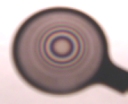
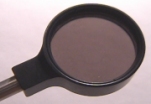
Brent's Concentric Ring Sight.


Hi all.  After a few of years of tinkering around, finding raw materials sources, and clearing all the engineering hurdles  I put together some killer  ring sights.  These are concentric ring sights.. like military surplus, but all new parts.  They are the best made concentric sights in the world.
 

Glass Covered Optics

I cover the optics with glass.  This allows you to use a t-shirt or other soft cotton cloth to clean the surface of your sight.  All the other cross sights on the market leave the polarizer material exposed and it is a relatively soft plastic which scratches easily.  You don't have to worry about the durability of this sight... it will last for many years.  Some cheaper built sights (Concentric and Cross) have plastic polarizers as the surface material for the optical stack, but I went the extra mile to have thin glass substrates cut (just like the military ones) and assembled them together inside a beautiful anodized aluminum bezel.
 

Removable Shaft


The shaft comes off to allow you to custom cut the shaft without endangering the optics (in the garage near the saws, you know).  Once the shaft is cut to size, you should tighten the bezel down to the shaft.  It would be advisable to use lock-tight (the blue one) or crazy glue to lock the threads, but this is not necessary as you should not be twisting it hard enough to unscrew the bezel during field adjustments if you are using the proper clamp.
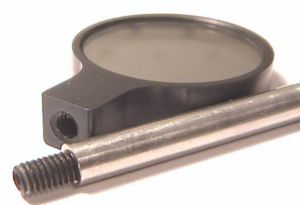


New Bezel Option!!

This bezel has two holes drilled into it to allow you to route your CamEye II in front of the optic and hold it in place with a tiny tie-wrap that goes through the holes.  If you like this option, just let me know ahead of time and I'll assemble your sight in one of these bezels.


Call me for current inventory, as I have some blemished or prototypes available at a discount and also have some original military surplus from time to time.
 

The sight shown has a 4" long 1/4" shaft.

Pricing is as follows:

Sight only - $250 + $10 insured/return receipt US first Class mail.

1/4" - 1/4" swivel clamp + 1/4" aluminum mounting post. - Add $25.

Click HERE for order form.

Contact Brent Finley


A note about concentric ringsights:

Concentric sights are a precision optic.  It is made from a calcite crystal with an easily scratchable surface, mounted between two circular polarizers with glass coverings for protection.  Precision optics were not made to go through temperature extremes very quickly.  It induces stresses in the elements and can even crack the crystal.  If you jump at a DZ that has very cold temperatures overnight, DON'T leave your helmet in a team room or a car.  You are asking for unneeded wear and tear on your sight.  Here is a discussion of  what happens to calcite sights under different environmental conditions.

Brent's Ring Sight - I use a stack of optics that are: Glass, Polarizer, Calcite, Polarizer, Glass.  These are laminated together in the bezel.  The problem with modern day polarizers is that they are mounted on a plastic base called Celluloid Acetone Butyrate or "CAB" for short.  Optical Epoxies don't stick well to CAB.  Over time, the layers can delaminate when they go through temperature changes in normal use.  This will cause some minor fringing phenomenon that shouldn't affect the practical operation of the sight, although it won't look very pretty.

Sights that are not optically laminated (such as the skydance concentric sight, characterized by a plastic PVC bezel) is only a stack of  Polarizer - Calcite - Polarizer.  Since they are not laminated with an optical epoxy, they are free to rub against each other.  This will etch and pit the calcite crystal and it will get cloudy.  Also, the polarizer plastic is not protected  and can be scratched easily with a t-shirt when you rub dirt and oil off it.  This will make it look and perform worse.  Eventually the sight is unusable.

Some military optics from years ago (those with a "35" etched on one side of the glass) were made with very special polarizers which had a 1mil thick polarizing substance mounted directly to a glass carrier (which also acted as the outside protector of the optical stack).  This does have the un-epoxyable CAB material in it, however, it it not laminated with epoxy, but tree sap.  That's right!  Tree SAP.  Before high tech epoxies, Opticians who laminated doublet lenses together used Canada Balsam... a sap.  Although these sights seem to last forever, the sap will yellow over time.  This doesn't seem to affect what you see much because the polarizers make it dark to start with, but extreme yellowing and sun damage makes many old sights unusable.  I am going to be looking into getting special polarizers made for my crystals, but I expect they will be very expensive.  Pricing could be prohibitive.

My final design is a happy medium between full lamination of all layers and no lamination at all.  I laminate the polarizer to the crystal (with a top secret method) to prevent etching of the crystal over thermal cycles that the optic goes through during a skydive.  The glass layers are not laminated to the polarizers, as the scraching is not a danger at that interface.  One thing you will notice is a rainbow or oily looking effect under the surface of the glass.  When you first look at it, you wonder "what are all those splotches?"  You will see this on any sight besides the original military concentric sight. It is just a natural phenomenon between two very tight (but not exactly flat together) surfaces.  It is of no consequence when you hold the sight up to your eye and will not affect what you see when using your sight.

Click Here for Brent's Home Page


Written and maintained by Brent Finley